

Structural Integrity and Components of Stair Platform Subassemblies
The load-bearing plate of a close-range transportation device is subjected to continuous bending, torsional, and impact stresses. In the area of the stair platform landing, there is an accumulation of static loads (passenger weight with a trolley) as well as dynamic loads resulting from the operation of the folding and unfolding actuators. The company MPPR provides professional structural solutions that meet rigorous criteria for rigidity and resistance to material fatigue, ensuring safe transfer of forces to the trolley.

Specifications and diagnostics of platforms – FAQ
Microswitches (safety limit switches) integrated with approach ramps and platform base cut off the main drive power when an obstacle is detected on the device's traffic path.
The main qualifying criteria are: excessive play on the main shafts, plastic deformation of the load-bearing structure, leaks of actuators, and delayed reaction of protective barriers.
In order to reduce the vehicle's weight (which decreases the engine load) and maintain high structural stiffness, aluminum alloys with enhanced strength (e.g. 6000 series) are used, connected with steel kinematic joints.
Yes, we provide custom embossed plates and high-friction self-adhesive mats that are resistant to abrasion, moisture, and UV radiation.
The most common electrical fault in the platform area is the breakage of wires in the harness bundle (moving connection between the carriage and the plate) due to material fatigue of copper.
Kinematic Analysis and Safety Mechanisms of a Platform Lift
In modern entrance systems, the floor is not just a passive working surface. It is a fully automated module connected to the machine's safety circuit. Any malfunction in this area results in an immediate stop of the device. MPPR offers specialized parts for platform lift platforms, designed for flawless operation in industrial cycles:
- Ramps and access flaps: Elements integrated with the lifting mechanism, which create a smooth descent when deployed and serve as side barriers protecting the wheelchair wheels during movement.
- Sensitive bottom of the platform (edge sensors): Mechanical-electrical systems that detect obstacles under the platform (e.g., luggage left on the stairs) and send a stop signal to the PLC controller.
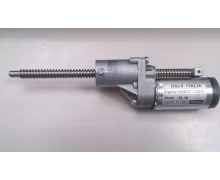
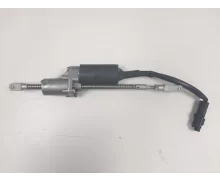
- Actuators and gas springs: Components responsible for assisting or fully automatically folding the platform to the vertical position, minimizing the device's footprint on the staircase.
Metalworking and Environmental Degradation Resistance
Designing operational components working in variable thermal conditions requires the selection of materials with a low coefficient of expansion and high corrosion resistance. By choosing parts for platform lift platforms from MPPR, service engineers receive elements made of anodized aerospace aluminum and passivated stainless steel. This prevents play in the pivot holes and ensures the stability of anchoring points of protective barrier arms.
OEM Compatibility for Professional Services
For entities performing maintenance under the supervision of the Technical Inspection Authority, geometric repeatability of spare parts is crucial. The company MPPR eliminates the risk of structural mismatches by providing main pivots, self-lubricating bronze bushings, flexible wire harnesses, and sealing components according to the technical documentation. Our entrance platform lifts and related accessories ensure the restoration of factory stiffness parameters, securing the flawless operation of systems for years to come.